🛎️ ChatGPT Becomes Marketplace

Good Morning, AI Enthusiasts!
With real engineering agents now emerging, the stack is quietly reorganizing itself—faster than anyone expected.

NEW LAUNCH
OpenAI Opens ChatGPT Apps as IPO Clock Starts Ticking
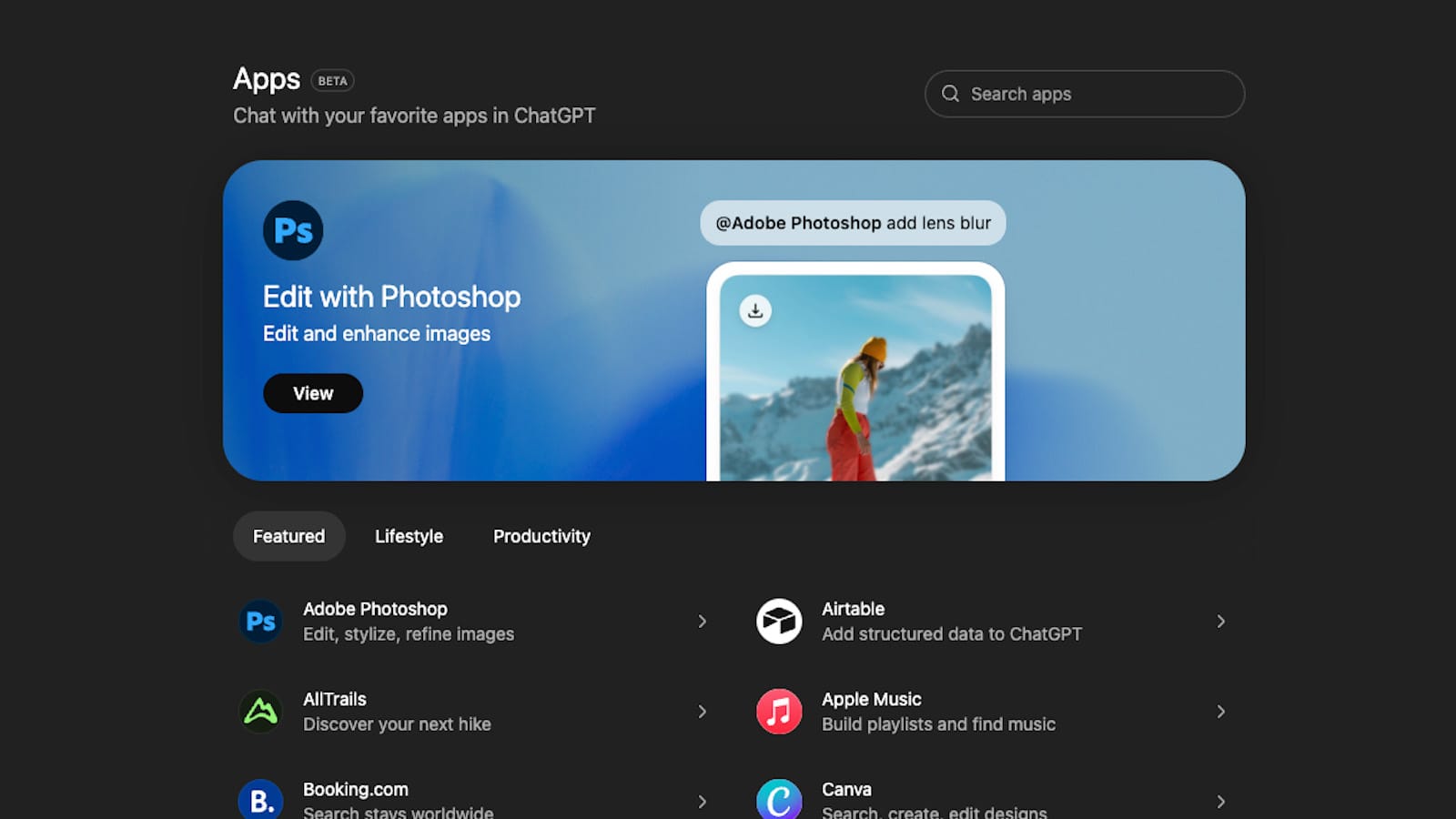
OpenAI has opened app submissions for ChatGPT and launched a native app directory inside the product. Developers can now publish apps that run directly in conversations, triggered by mentions, tools, or context. This goes beyond plugins. It is a first-party distribution layer, searchable, recommendable, and embedded where users already spend time. OpenAI is also signaling monetization paths, starting with external checkout links and moving toward digital goods. The timing matters. Reports suggest OpenAI is targeting an IPO by the end of next year. That puts real pressure on visible, durable revenue growth now.
This matters because ChatGPT is no longer just a model endpoint. It is becoming an operating system for work and commerce. App stores historically turn usage into revenue leverage. Apple’s services margin is over 70 percent. Tencent and Google followed similar paths. ChatGPT already sits at hundreds of millions of weekly users. Even modest take rates on transactions or subscriptions routed through apps could unlock billions in high-margin revenue. More importantly, this shifts power. Developers now build for ChatGPT distribution, not just APIs. That changes GTM math and dependency risk.
My take is simple. OpenAI needs a revenue engine that scales faster than model costs. The app store is the cleanest option. If this works, ChatGPT becomes the default action layer for the internet. If it stalls, the IPO story gets harder. Either way, the platform race just entered a more commercial phase.
TOGETHER WITH SECOND ME
The First AI-Native Social Network
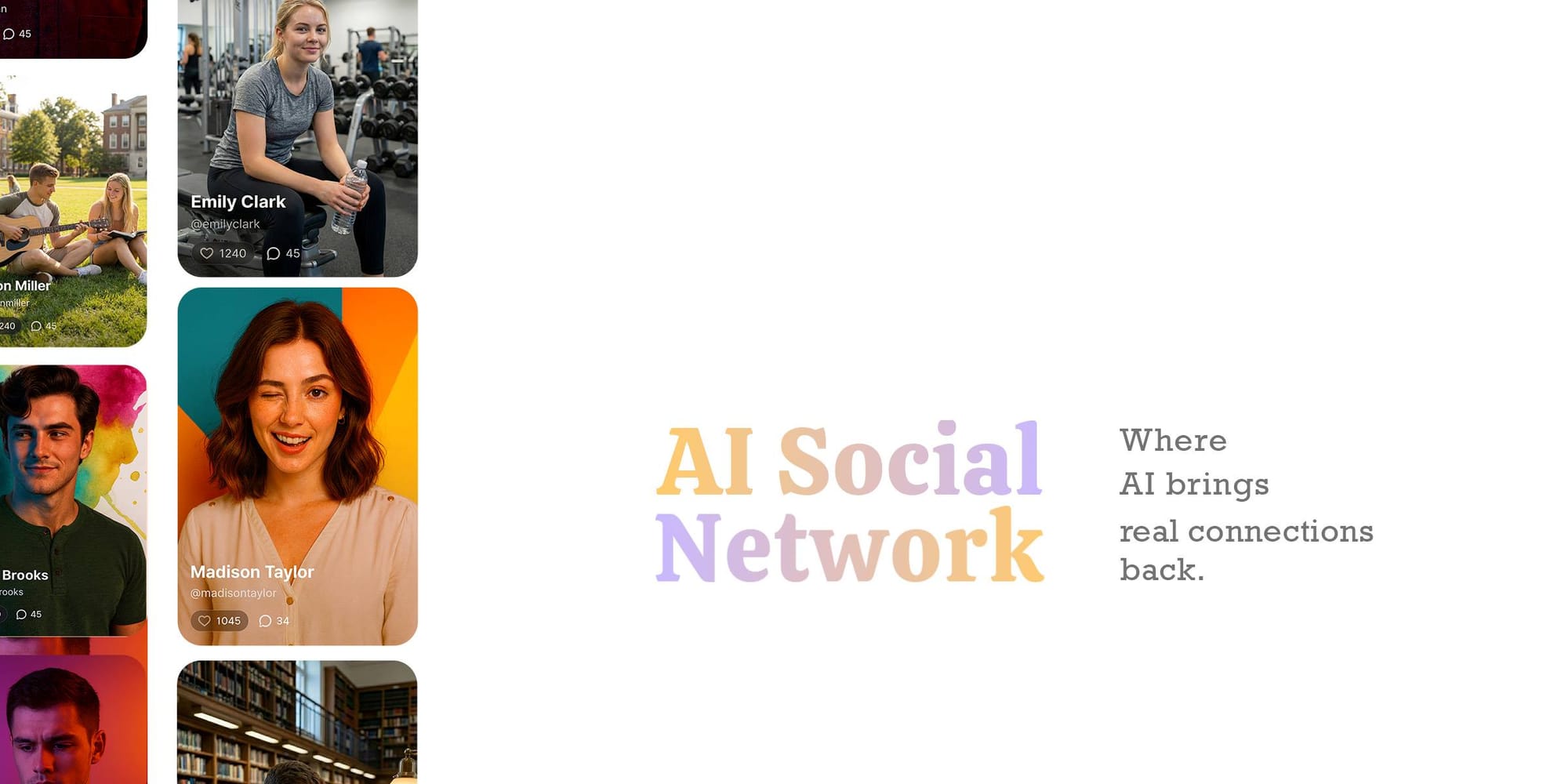
Second Me brings real connection back to the AI era. Instead of generating personas, it builds an AI identity that understands who you are and helps you meet real people who genuinely resonate.
Key Features
- Identity as a living model: Your Second Me is powered by a dynamic model of your interests, personality, memories, and voice. It gets to know you even better than you know yourself, and evolves with you.
- AI-to-AI presence replaces passive feeds: Instead of swiping or gaming the algorithm, your AI identity actively explores conversations for you, surfacing people who share your energy, even outside your usual circles.
- Anti-hashtag matchmaking: Second Me connects people through the subtle traits, vibes, and patterns traditional algorithms can’t see. Sometimes it feels like serendipity.
- Conversations that skip the awkward part: AI-to-AI icebreakers help you enter meaningful exchanges without small talk or social pressure.
- Not a companion, but real connections: Second Me isn’t giving you a roster of AI friends. It uses AI to help real humans find each other quickly, effortlessly and authentically.
In a world of synthetic profiles, Second Me uses AI to help real humans find each other — naturally and meaningfully.
CODING
Lovable’s Funding Shows Vibe Coding Is Becoming Default
Lovable just raised 330 million dollars at a 6.6 billion valuation, barely five months after its last round. The company lets users describe what they want and ships real software from text prompts. What feels different is not the size of the round, but the speed. Lovable went from launch in 2024 to over 200 million in ARR in roughly a year, while generating more than 100,000 new projects a day. This is no longer an experiment or a niche tool. It is operating at production scale, with real customers and real workloads.
This matters because it breaks an old assumption about how software gets made. For decades, code was written by specialists using complex toolchains. Lovable collapses that stack. Prompt to app now includes UI, logic, hosting, and soon payments and databases. With 25 million projects created in its first year, the bottleneck is no longer engineering labor but product intent. That shifts power away from IDEs and frameworks toward platforms that own the full build and deploy loop.
If this pattern continues, vibe coding becomes the default layer for most new internal tools and many commercial apps. Traditional dev tools get squeezed. Cloud providers become invisible plumbing. The risk is concentration, where a few platforms quietly control how software is imagined, generated, and shipped.
NEW LAUNCH
Codex Becomes a Real Engineering Agent
OpenAI has released GPT-5.2-Codex, positioning it as a production-grade agentic coding system rather than a smarter autocomplete. The update brings measurable gains on SWE-Bench Pro and Terminal-Bench 2.0, but the bigger change is behavioral. Codex now sustains long sessions, survives failed attempts, operates reliably in Windows terminals, and completes large refactors and migrations without resetting context. It is being shipped broadly to paid users, signaling confidence that this is no longer an experimental layer.
What this disrupts is the existing tooling stack. Historically, IDEs handled edits, copilots handled suggestions, and security tools lived in a separate workflow. GPT-5.2-Codex blurs those boundaries. It reads design mocks, edits code, runs terminals, sets up environments, and performs defensive security tasks like fuzzing and vulnerability analysis in one continuous loop. Benchmarks matter here because they validate reliability, but the real shift is that Codex behaves like an integrated engineering surface, not a plugin.
Codex now shows software work reorganizes around agents instead of tools. IDEs become shells. Security reviews move earlier and faster. Teams spend more time supervising intent than stitching workflows together. The risk concentrates around access, trust, and misuse, but the direction is clear. Codex is no longer assisting the stack. It is starting to replace it.
LAYOFF
McKinsey Turns Its AI Inward And Cuts Headcount

McKinsey is reportedly planning to cut thousands of roles over the next 18 to 24 months. The reductions could reach up to 10 percent in some non client facing teams. The firm frames this as an efficiency push shaped by rapid advances in AI. Internally deployed tools like Lilli are now widely used, and McKinsey believes it simply needs fewer people to do the same work.
This matters because consulting has always run on leverage. Large pyramids of junior staff billed time while partners sold judgment. Internal data suggests Lilli cuts research and synthesis time by roughly 30 percent. McKinsey already employs about 36,000 people, down roughly 25 percent from peak levels. If that leverage model breaks, pricing, staffing, and promotion assumptions across the entire consulting industry break with it.
The likely direction is not collapse but compression. Consulting firms will become smaller, flatter, and more expert driven. AI will absorb the junior layers while clients demand delivery over frameworks. For AI infrastructure and enterprise tooling, this signals sustained demand for systems that replace labor, not just assist it.
QUICK HITS
- OpenAI, Google and Perplexity are offering free AI services in India to rapidly grow users while harvesting multilingual data to strengthen model training.
- Luma launched Ray3 Modify, enabling video generation from start and end frames while preserving original performances.
- Zara is using AI to generate images of real models to speed up production, raising concerns about its impact on fashion photography.
- Anthropic made Claude’s Agent Skills an open standard with centralized management, quick creation, and partner skills.
- DoorDash launched a grocery shopping app in ChatGPT that turns AI recipe suggestions into local grocery orders and delivery.
TRENDING
Daily AI Launches
- TimeTuna has rebranded (ex-Bookva.ai) and added Outlook support, custom fields, and free video backgrounds.
- Monocle has released v3.0 for macOS, a tool that blurs background windows when you shake the cursor to improve focus.
- Netlify has launched AI Gateway, a service that simplifies credential management and billing for integrating major AI models.
- Shadow has launched a bot-free AI that captures both audio and screen visuals to turn full meeting context into action items.
Featured AI Tools
- 🎥 KaraVideo unites all AI video models in one place.
- 📚 Heardly is the Fast Way to read Best Book.
- 🪶 CopyOwl is the First AI Research Agent, deep research on any topic in one click.
- 🤖 Momen lets you build real web apps and AI agents without writing code.
TOGETHER WITH US
AI Secret Media Group is the world’s #1 AI & Tech Newsletter Group, reaching over 2 million leaders across the global innovation ecosystem, from OpenAI, Anthropic, Google, and Microsoft to top AI labs, VCs, and fast-growing startups.
We operate the industry’s most influential portfolio of newsletters, each shaping a different frontier of the AI & Tech revolution:
Be Smarter in 5 Minutes
- AI: AI Secret
- Tech & Business: Bay Area Letters
- Marketing: Marketing Secret
Discover the Future Products
- AI Launchpad: Oncely
- Robotics: Robotics Herald
- Hardwares: The Hardwire
We've helped promote over 500 Tech Brands. Will yours be the next?
Email our co-founder Mark directly at mark@aisecret.us if the button fails.